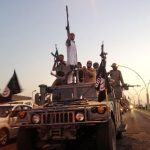
On June 10, 2014, town of Mosul — Iraq’s second largest, dwelling to just about two million individuals, constructed on and across the ruins of the Assyrian capital Nineveh — fell to the Islamic State in a single evening. The Iraqi Military dissolved. Troopers deserted their uniforms within the streets. By morning, a metropolis that had been constantly inhabited for 7,000 years belonged to a drive that supposed to abolish the whole lot it had been.
I used to be inside town when it fell. I’m a historian. When ISIS took Mosul, I made a alternative that will outline the following three years of my life and reshape the whole lot I understood about myself: I stayed. I documented. I refused to let the occupiers change into the only authors of what was taking place to my metropolis.
I used to be on the College of Mosul when the order got here. The safety forces issued clear directions: Everybody should go dwelling. We started operating. It’s by no means protected to remain on the streets when Mosul locks down, and even earlier than I understood why this curfew felt completely different from the others, I might see it within the faces of the individuals round me. They weren’t transferring with the irritated haste of individuals managing one other interruption. The sky was dusty and purple.
Within the early morning hours of June 10 — whereas gunfire nonetheless sounded from the western districts — I had posted on my private Fb web page, merely noting that I might hear the assaults. A good friend messaged me inside minutes, warning that I used to be risking the whole lot.
He was proper. I didn’t cease taking notes, however I ended posting beneath my very own title. The commentary continued; the publicity didn’t. That shift — from public voice to hidden recorder — was step one towards what got here subsequent, although I didn’t but perceive the place it could lead.
By the afternoon of June 17, I created an nameless weblog on WordPress and wrote the phrases that mark the actual starting of “Mosul Eye: A Scholar’s Clandestine Battle In opposition to ISIS.” I selected the title Mosul Eye as a result of I wished town to have an eye fixed that noticed what was being completed to it — an eye fixed that might not be closed by the lads who had been attempting to exchange its reminiscence with their very own.
My hand was regular as I typed. The remainder of me was not. What I witnessed that day was tough to specific. There have been many fabrications and false tales being unfold by the media, contradicted by actuality on the bottom. My work as a historian required an unbiased strategy. I might maintain my private opinion to myself. I might talk solely the information I noticed. That was not an aesthetic choice. It was a self-discipline for survival and fact.
One of many armed occupiers gave me a model of occasions that stayed with me. Their entrance into Mosul, he stated, had been deliberate as a revenge mission. They ready explosives to safe their withdrawal and anticipated to stay for 2 days at most. The collapse of the Iraqi Military had not been anticipated. However the street opened in entrance of them, so they didn’t cease. He known as it a liberation just like the liberation of Mecca — invoking the Prophet Muhammad’s conquest of that metropolis, framing what had occurred because the achievement of non secular future.
The previous Counter-Terrorism Heart grew to become the primary ISIS headquarters. A couple of of the Arab fighters I had seen within the early days — Tunisians and Algerians who got here to Mosul from overseas — had been guarding its gates. One in all them was white-haired, in his sixties, carrying a pistol at his waist.
Close to the College of Mosul, on a public tv set mounted on the street, an ISIS video performed constantly, exhibiting killings and kidnappings carried out on the Mosul-Baghdad street.
On the night of June 21, an ISIS fighter drove by a neighborhood with a loudspeaker mounted to his automobile, saying that each family was required to ship a volunteer to hitch ISIS forces. The phrasing was exact: Be a part of, defend, stay in dignity and honor — or face loss of life.
What I feared was not merely loss of life or occupation within the slender army sense. I feared civil collapse — the destruction of the circumstances beneath which Mosul might nonetheless consider itself as a metropolis belonging to historical past relatively than to sect, revenge, and barbarism.
What ISIS was doing was not solely army conquest. It was the systematic dismantling of the preparations that made that coexistence doable, nevertheless imperfectly.
I continued checking rumors, as a result of falsehood was turning into one other entrance within the battle. Rumors circulated that the Mufti of Mosul — the senior Islamic non secular authority within the metropolis — was killed by ISIS. I contacted a member of his household and confirmed that he had actually left Iraq a number of days earlier than the disaster and was in Qatar.
False atrocity tales, false reassurances, false claims of safety, false reviews of siege, false ethical panics — Mosul was drowning in all of them, and the drowning served ISIS as a lot as any of its different techniques. When the inhabitants can’t distinguish fact from fabrication, when concern attaches to rumors that haven’t any foundation alongside fears which might be fully justified, the result’s a form of paralysis that advantages whoever holds the weapons.
To doc town honestly meant resisting each the lies of ISIS and the sensational fantasies of these outdoors it.
Within the metropolis, ISIS started destroying historic, non secular websites. On June 24, the demolition of al-Fatih al-Mosuli started. The shrine, recognized regionally as al-Sheikh Fathi, was pulled down with cranes working in darkness.
Al-Fatih was a Sufi mystic who lived through the reign of the Abbasid caliph Haroun al-Rashid within the eighth century. Sufism — the paranormal custom inside Islam, emphasizing religious expertise and devotion to saints — was exactly what ISIS, with its inflexible scriptural literalism, thought to be idolatry. The shrine had been a spot of Sufi pilgrimage for greater than seven centuries.
The destruction of the shrines was not random vandalism. ISIS was reorganizing Mosul’s relationship to its personal previous, eradicating the bodily markers by which town remembered itself.
I stayed in Mosul not as a result of I used to be unafraid — I used to be afraid each day for 18 months, afraid within the particular and draining approach of somebody who lives with the everlasting information of what occurs if they’re discovered, a information that turns into the background radiation of each waking second with out ever turning into unusual.
I stayed as a result of I understood what cities want when they’re taken: They want somebody who will keep in mind them precisely. Not heroically. Precisely. Somebody who will write down the title of the person executed within the public sq. and the title of the sq. and the acknowledged cost and the date and the variety of individuals compelled to look at. Somebody who will file the worth of bread and the closing of the faculties and the burning of the library and the empty Christian quarter and the executions after prayers. Somebody who won’t let the conquerors write the one historical past.
I didn’t know then what that alternative would demand of me. I didn’t know the way lengthy I must proceed, how elaborate concealment would change into, or what number of layers of concern would settle over every day life.
I didn’t know the names that will later dominate Mosul, the programs that will harden out of these first checkpoints and councils, the punishments that will make personal thought harmful, or the variety of lifeless who would disappear into rumor and class except somebody insisted on truth.
I solely knew that Mosul was occupied, that reminiscence was already beneath assault, that actuality itself was being falsified in actual time, and that if somebody inside town didn’t begin recording rigorously, the occupiers would inherit not solely the streets however the narrative.
Mosul had not disappeared into nothing. It had disappeared into one other order.
This text has been tailored from “Mosul Eye: A Scholar’s Clandestine Battle In opposition to ISIS” (Skyhorse, July 21).