WASHINGTON — Iran’s leaders are preventing one another virtually as a lot as they’re battling the West, with some senior politicians scrambling to save lots of US talks whereas the highly effective Islamic Revolutionary Guard Corps leans into the renewed warfare, regional sources advised The Put up.
With Supreme Chief Mojtaba Khamenei out of public view, there’s nobody left to drive the rival factions again into line — which means the way forward for the battle could now be determined by an influence wrestle in Tehran, not by Washington.
The rising divide has uncovered what the sources describe as two competing facilities of energy inside Tehran: civilian leaders making an attempt to protect a fragile diplomatic observe and army hardliners decided to maintain up strain by means of confrontation.
Iranian President Masoud Pezeshkian, International Minister Abbas Araghchi and Parliament Speaker Mohammad Bagher Ghalibaf need to preserve dialogue with the US alive and forestall the preventing from spiraling into one other full-scale regional warfare, the sources stated.
However their authority has steadily eroded, one regional supply conversant in Iran’s inner dynamics advised The Put up.
“They’ll signal [agreements], however they will’t cease the IRGC from performing or parliament from legislating round them,” the particular person stated.
As an alternative of profitable inner political battles, the IRGC has more and more created “information on the bottom” by means of army motion, the supply stated, whereas hardline lawmakers transfer afterward to enshrine these actions into legislation.
“The hardliners don’t must win inner arguments,” the supply stated. “They create information on the bottom … and get parliament to legalize them after the very fact.”
“The shift is actual — now it’s changing into legislation, which is way more durable to reverse.”
That distinction — between the politicians publicly talking about diplomacy and the safety institution making selections on the battlefield — is essential, based on Behnam Ben Taleblu, senior director of the Basis for Protection of Democracies’ Iran Program.
“Sure, there are politicians who sometimes come out, together with even Iran’s international minister, who speak about dialogue,” Taleblu advised The Put up. “However these driving the prepare, these with their finger on the set off, these making among the most necessary selections proceed to speak and act like escalation is what is going to safe their survival, not engagement.”
Whereas Tehran has traditionally balanced diplomacy and army strain concurrently, Taleblu stated current occasions recommend the regime is more and more betting on confrontation.
“There’s clearly a divide in Iran,” he stated. “However we now have to ensure that after we take a look at the divide, we take note of who issues and what issues — and who and what matter appear to be doubling down on escalation.”
The widening cut up has turn into more and more seen in current weeks, the supply stated.
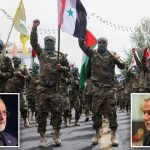
In the course of the funeral ceremonies for Ayatollah Ali Khamenei, the entrance rows have been full of IRGC members fairly than civilian officers, underscoring the army’s rising affect, based on the supply.
What’s extra, a number of televised speeches by Iran’s political management have been partially edited earlier than broadcast as a substitute of working stay — elevating additional questions on who controls the nation’s public messaging, the particular person added.
However the IRGC has its talons in virtually each establishment in Tehran, with the Iranian parliament additionally shifting to undercut the diplomatic observe.
Lawmakers backed a measure with roughly 180 of the chamber’s 290 members declaring the Islamabad Memorandum of Understanding successfully lifeless, whereas individually advancing laws launched by lawmaker Ebrahim Azizi titled the “Strategic Motion for the Safety and Sustainable Progress of the Strait of Hormuz and Persian Gulf.”
Taleblu argued the regime seems satisfied warfare nonetheless advantages them regardless of struggling heavy army losses.
“They consider there are actual boundaries to escalation by Trump, and that there are actual positive factors available by escalation,” he stated. “They’re those who transgressed on the MOU. They’re those who consider each time America responds, they’ve the suitable to reply.”
That divide grew to become more and more obvious Tuesday, when senior Iranian political figures went to mediator Pakistan in an try to preserve diplomatic channels open.
“They need mediation,” a regional supply advised The Put up — including that the civilian management could turn into extra highly effective now that the “IRGC is aware of that it gained’t get weapons from another market anymore.”
Ordinarily, Supreme Chief Mojtaba Khamenei could be anticipated to settle such an inner dispute — however he hasn’t been seen publicly for the reason that Feb. 28 bombing that killed his father and positioned him in energy, showing solely by means of written statements fairly than speeches, televised appearances and even household funerals.
“I believe if he ever does come out of hiding — or if it’s confirmed that he does actually exist — he would be capable of rally among the Islamic Republic’s factions simply by advantage of getting survived towards all odds,” Taleblu stated.
“That being stated, the truth that he didn’t come out for his father’s funeral, the truth that he hasn’t been seen in as long as the nation’s new supreme chief, tells you much more about who’s pulling the strings,” he added.
The supreme chief’s absence has fueled uncertainty over who is really directing Iran’s strategic decision-making, whereas leaving rival factions with larger room to pursue competing agendas.
“There isn’t a one left to drive the 2 sides into alignment,” one of many sources stated.
Washington shouldn’t mistake diplomatic rhetoric from Iranian politicians for a shift within the regime’s underlying technique, Taleblu warned.
“It’s not a query of whether or not we’re chatting with the unsuitable individuals,” he stated. “It’s a query of what talking will get you.”