Metropolis and city leaders throughout Connecticut have been fielding rising pushback from residents over automated license plate readers, which opponents say increase a variety of issues about privateness.
However as many state and native leaders have known as for a pause on the know-how to weigh new coverage steerage, a number of cities are putting in AI-powered license plate readers on faculty buses.
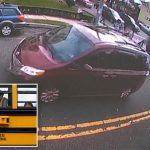
Greater than half a dozen cities — together with Vernon, Bridgeport, Danbury, Shelton, Stratford, North Haven and New Haven — have contracted with an organization known as BusPatrol, which installs the know-how on the cities’ bus fleets, then makes use of it to assemble footage of any motorist passing a bus that’s displaying flashing purple sign lights.
The corporate’s technicians log the occasions and supply the recordings to native legislation enforcement.
In contrast to some license plate studying cameras — comparable to these owned and operated by the corporate Flock Security — BusPatrol’s aren’t constantly monitoring the roads.
They’re triggered “solely when a college bus is stopped with its warning lights and cease arm engaged,” a spokesperson from BusPatrol stated.
Since 2011, Connecticut has allowed digital video as proof of a violation.
A 2024 legislation change put extra energy within the fingers of municipalities to determine video monitoring methods and concern fines.
And to this point, they’ve caught fairly a number of.
In New Haven, which put in the know-how on greater than 300 buses earlier this 12 months, cameras have already recorded 12,000 incidents.
Marc Petruzzi, chief of police in Vernon — which introduced its rollout final month — stated the city put in the cameras to keep away from future tragedies.
“Passing a stopped faculty bus is likely one of the most harmful issues {that a} driver can do,” he stated at a press convention asserting the initiative.
Within the first three days of this system, BusPatrol cameras caught virtually 100 motorists passing faculty buses, stated David Owens, a spokesman for the city.
Nonetheless, some Connecticut residents are cautious of the cameras — significantly with regards to how the video they seize is saved and shared.
“I feel AI cameras on faculty buses ought to be banned, simply as all AI cameras within the state and within the nation ought to be,” stated Dan Piper, an organizer for CT Civil Liberties Protection Committee and instructor within the Hartford space.
Piper expressed concern over the potential for video being shared with federal immigration enforcement companies and linked to different databases that use AI for surveillance.
“When somebody tells me that we’re going to have extra cameras which can be linked to non-public databases that use AI to seek for individuals, we all know that these corporations are sharing that data,” Piper stated.
A spokesperson for BusPatrol, stated the corporate’s baby security methods are regulated by the state by which they’re put in. “BusPatrol retains data solely for so long as it’s wanted for legislation enforcement evaluation or required by legislation and is purged as soon as the quotation reaches its remaining disposition. By default, all information belongs to the college district,” he stated in an emailed assertion.
The varsity bus use case
It’s been unlawful to move a stopped faculty bus for many years in Connecticut, however state and native officers have struggled with enforcement.
Every year, hundreds of individuals drive previous stopped faculty buses.
Within the final six years, there have been 12 fatalities and 23 severe accidents in Connecticut involving faculty buses, stated Josh Morgan, communications director on the Division of Transportation.
It’s not clear what number of of these incidents concerned vehicles passing a bus with its lights flashing.
Connecticut lawmakers have established penalties for passing a college bus at a number of hundred {dollars} per offense.
In 2011, the state allowed native police and college districts to put in cameras on buses to file incidents and to make use of that proof towards motorists accused of illegally passing a bus.
It set the advantageous for a first-time violation — no matter whether or not it was caught on digital camera — at $450.
In 2024, lawmakers up to date the statute to provide municipalities the facility to authorize video monitoring system by way of ordinance, and it set the advantageous for first-time violations caught on digital camera at $250.
The advantageous for violations caught by officers in-person remains to be $450.
However as cities and cities start to deploy extra bus cameras, residents in lots of communities in Connecticut are rising more and more cautious of any form of automated license plate studying (ALPR) surveillance.
That’s as a result of Connecticut has quickly turn into the state with the most ALPR cameras per capita in New England, in line with DeFlock, which tracks ALPR installations. Municipalities and companies throughout the state have put in almost 800 ALPRs so far.
Residents’ issues rose after reporting from CT Insider discovered that Connecticut ALPR cameras had been searched hundreds of instances by out-of-state companies implementing federal immigration and different states’ abortion legal guidelines.
In current months, residents have turned up at city conferences round Connecticut to register their opposition to know-how that might be used for surveillance by different states or federal enforcement companies.
Piper is a kind of residents.
“We now have requested at city council conferences, do you’ve information that reveals that the introduction of the cameras lowered crime? They usually by no means can say that they do,” he stated.
A Flock Security spokesperson not too long ago informed Connecticut Public that at the least half of the state’s police departments use a number of the firm’s companies, together with license plate readers and drones.
A Flock Security spokesperson declined to touch upon the general variety of cameras in Connecticut in an e-mail to The Connecticut Mirror.
Final month, Gov. Lamont known as for a 30-day pause on municipalities putting in new automated license plate readers whereas the Connecticut Police Officers Requirements and Coaching Council develops steerage for information retention and information sharing.
Lamont’s steerage addressed “faculty zone site visitors enforcement security gadgets, work zone pace management cameras, fastened ALPR gadgets, drones” however didn’t particularly name out faculty bus-mounted cameras.
Cathryn Vaulman, spokesperson for the governor, stated in an e-mail that the pause would enable “time to guage potential gaps in our present authorized protections and to provide cities, police and the trade an opportunity to speak the kinds of video know-how and use instances extra successfully.”